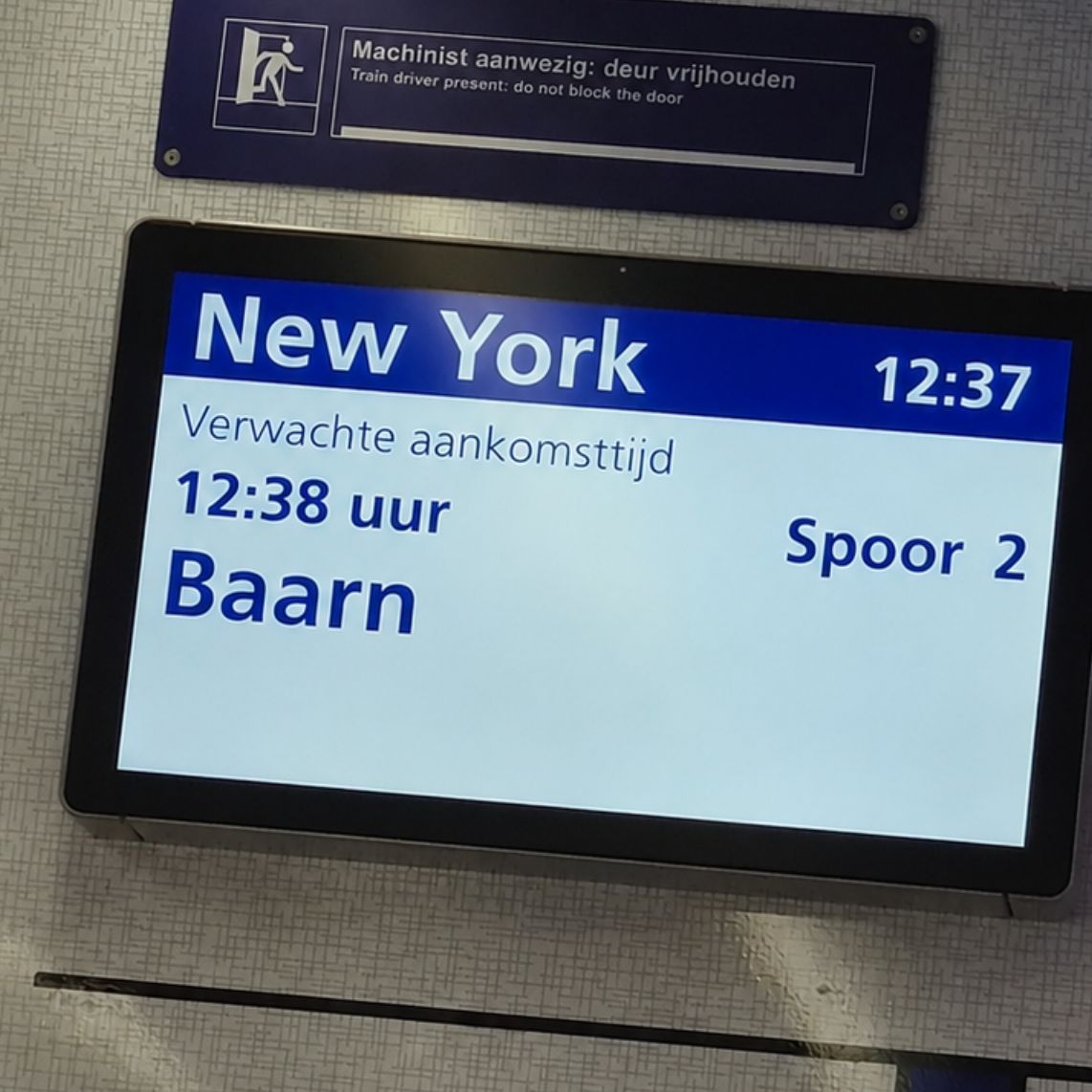
According to the display, I am almost in New York. Impressive, since the next stop is simply Baarn. AI can do that too: confidently spout complete nonsense. That does not mean I have given up on AI—in fact, quite the opposite. Over the past week, I have worked intensively with it on the first version of my GEO dashboard. That has made me appreciate AI more, but also understand its limits better.
The first version went live yesterday. Four companies, the first few hundred measurements, and figures that add up. Without AI—especially Opus and Fable—that would have taken me months longer. But the work has not actually become easier.
AI always presents itself as an expert. It sounds confident and persuasive, yet is regularly completely wrong. Earlier this year, on AI’s recommendation and against my better judgement, I gave my MacBook a few commands that were supposed to organise my computer files more conveniently. Within minutes, I had lost hundreds of files on my NAS. Afterwards, the same AI explained flawlessly how it could all have gone so wrong. Very helpful 🤡
After hundreds of conversations with AI, you start to recognise patterns. You become quicker at sensing when a conclusion does not fit the facts, no matter how convincing it sounds. That actually made me more curious about the signals behind the answers than the answers themselves. That curiosity led to my dashboard. I am especially proud of what it now shows: not just how visible a brand is in ChatGPT, Google AI Overviews, Gemini or Perplexity, but which signals shape that visibility and where the biggest opportunities to improve lie.
It feels like a different way of looking at online visibility. Less focus on search-engine positions and SEO tricks; more understanding of which signals determine whether AI includes a brand in an answer. I suspect that will become increasingly important in the coming years for everyone who has seen their organic traffic fall so sharply.
This translation was made by AI.